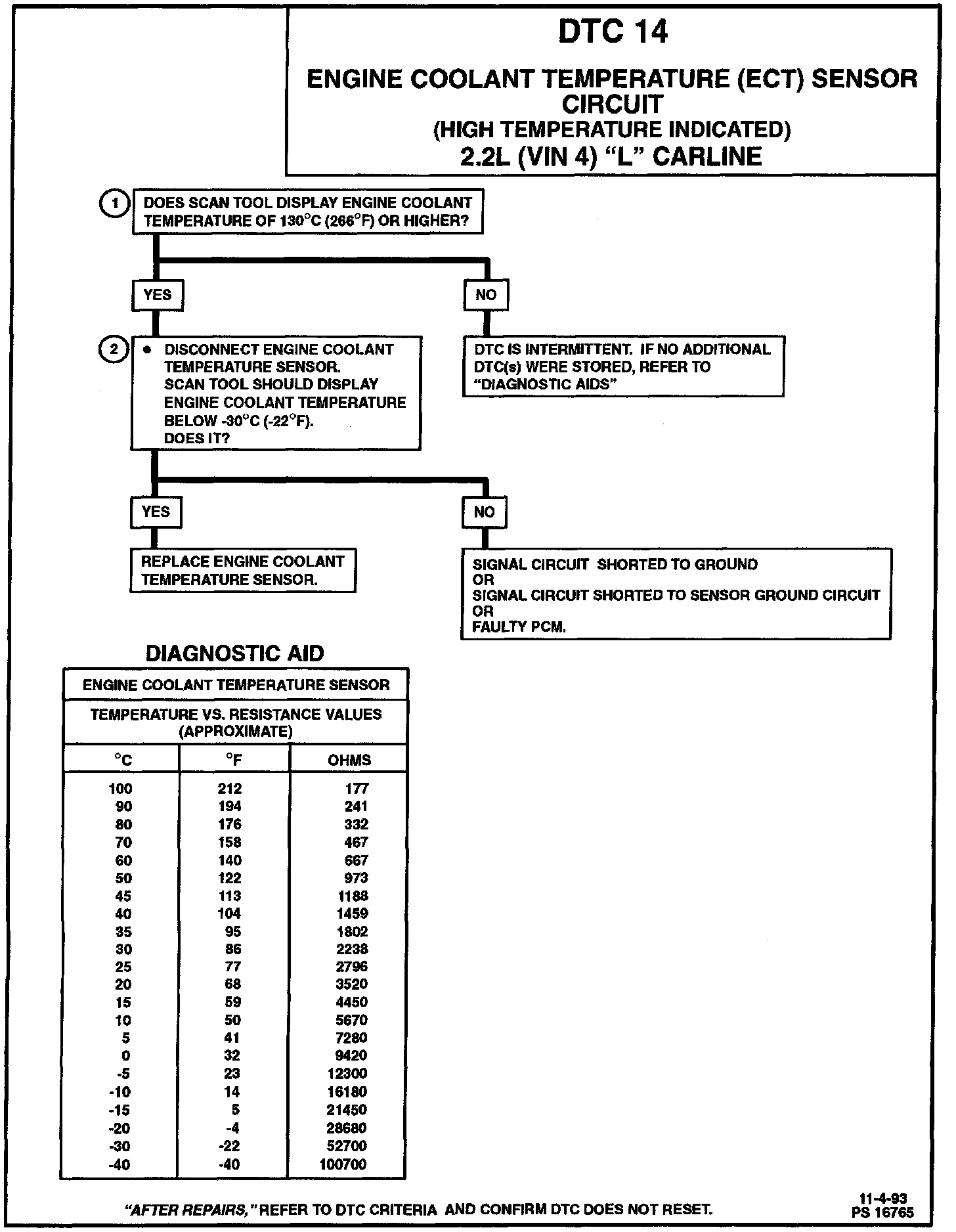
DTC 14 Engine Coolant Temperature (ECT) Sensor Circuit (High Temperature Indicated):
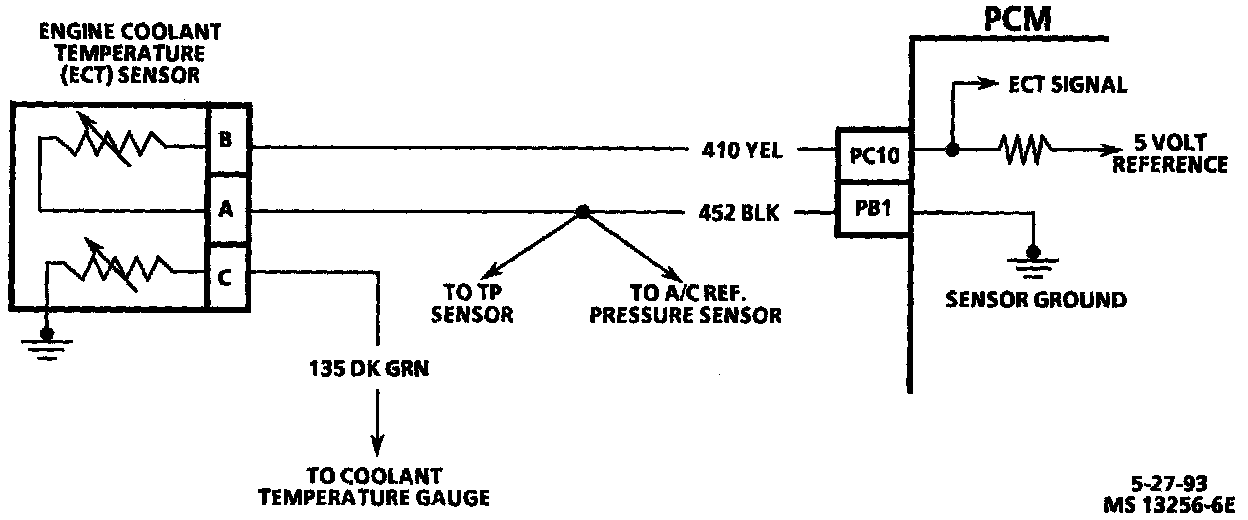
Engine Coolant Temperature (ECT) Sensor Circuit:
CIRCUIT DESCRIPTION
The Engine Coolant Temperature (ECT) sensor uses a thermistor to control the signal voltage to the Powertrain Control Module (PCM). The PCM supplies a 5 volt reference and a ground to the sensor. When the engine is cold the sensor (thermistor) resistance is high, therefore PCM terminal "PC 10" voltage will be high.
As the engine warms, the sensor resistance becomes less, and the voltage drops. At normal engine operating temperature, the voltage will measure about 1.5 to 2.0 volts at PCM terminal "PC 10."
Engine coolant temperature is one of the inputs used to control:
^ Fuel delivery.
^ Ignition Control (IC).
^ Idle Air Control (IAC).
^ Torque Convertor Clutch (TCC).
^ Evaporative (EVAP) canister purge solenoid.
^ Electric cooling fan.
DTC 14 WILL SET WHEN
^ Signal voltage indicates Engine coolant Temperature is greater than 140°C (285°F).
^ Engine run time is greater than 128 seconds.
ACTION TAKEN (PCM WILL DEFAULT TO)
The Malfunction indicator Lamp (MIL) will illuminate and the PCM will default to 85°C (185°F) for engine coolant temperature (Tech 1 scan tool will not show defaulted value), and the cooling fan will enable.
DTC CHART TEST DESCRIPTION
Number(s) below refer to circled number(s) on the diagnostic chart.
1. This step checks to see if DTC 14 was set as a result of a hard failure or intermittent condition.
2. his test will determine if CKT 410 is shorted to ground which will cause the conditions for a DTC 14 to set.
DIAGNOSTIC AIDS
^ Verify that engine is not overheating and has not been subjected to conditions which could create an overheating condition (i.e. overload, trailer towing, hilly terrain, heavy stop and go traffic, etc.).
^ The "Temperature vs Resistance Value" scale may be used to test the sensor at various temperature levels to evaluate the possibility of a shifted (mis-scaled) sensor. A shifted sensor could result in poor driveability.